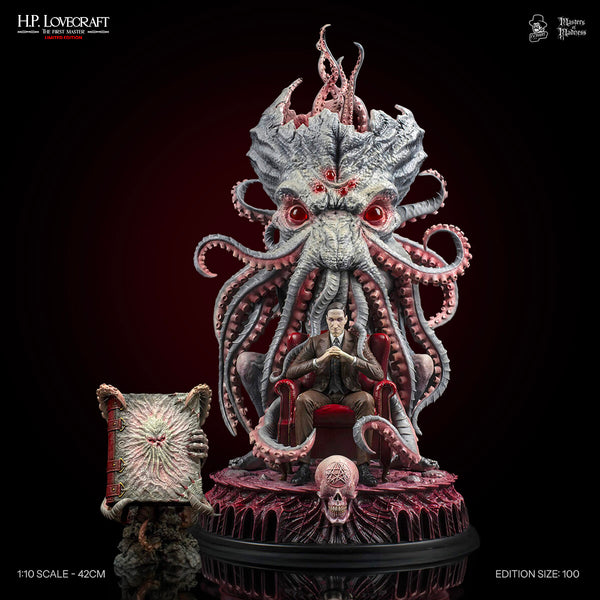
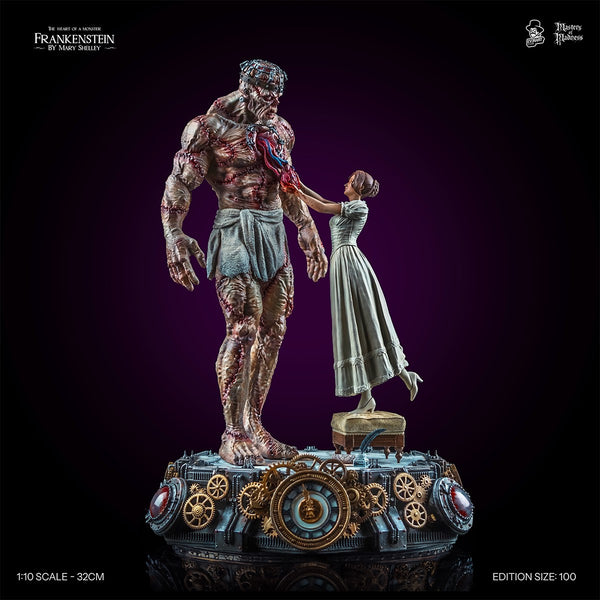
Most people who end up with a collection didn't plan to start one. They bought one piece that felt different from everything else on the market, and then they understood something they hadn't before: there's a category of objects that you don't buy because they're useful, or cheap, or convenient. You buy them because they mean something specific, and you don't want that meaning to disappear when the edition closes.
This guide is for people at the beginning of that realization. Not how to spend the most money — how to spend it right.
What Makes Something a Real Collectible?
The word gets used for everything, which makes it almost useless. A "collectible" in the marketing sense means nothing. In the collector's sense, it means something precise:
- Closed production. If you can buy it again in six months, it's not a collectible — it's a product. A real collectible has a production run that ends, after which no more copies exist.
- Verifiable scarcity. The number of copies should be declared, not implied. "Limited edition" without a number is a red flag. "100 numbered copies" is a statement you can verify when you hold the piece.
- Craft, not manufacture. The difference between hand-painted polystone and injection-molded plastic isn't purely aesthetic — it's about what the object represents. Hand-finishing means variation, attention, and time. It means the person who made it touched it.
- Original IP. Licensed collectibles — pieces made under a studio or brand agreement — carry a risk that original IP pieces don't: the license can expire, be revoked, or shift ownership. An original artwork has no such dependency.
Where to Start: Categories of Horror Collectibles
Statues and sculptures are the premium segment. They take up space, they have weight and presence, and they're the category most associated with long-term value. A well-chosen statue is the centerpiece of a collection, not the background.
Art prints offer a lower entry point and the ability to display more work across more wall space. They're a legitimate collecting category, though they rarely define a collection the way a sculpture does.
Collector's edition books serve dual purpose — readable and displayable. Leather bindings, slipcase editions, and annotated versions sit at the intersection of collector and reader. Good for people who want to start without committing to display-only objects.
Licensed props and replicas are a separate market. These follow film and game franchises and trade heavily on recognition. The quality varies widely, and their value is almost entirely dependent on the franchise's cultural standing, not the craft of the object.
The Trap: Mass Production Wearing a Limited Edition Label
This is the most common mistake beginners make, and it costs real money.
Watch for these red flags:
- No specific copy count — "limited" is mentioned but no number is given
- The same mold reused across multiple "editions" with different paint schemes
- Weight that feels too light for the size (indicates thin casting or hollow construction)
- Paint applied with perfect uniformity across every copy — this means machine spraying, not hand-finishing
- Edition numbers that are arbitrarily high: 5,000 of 10,000 is not scarcity
Real limited-edition pieces feel different when you hold them. The weight is right. The paint has texture. The number on the base is specific and low.
Your First Piece: How to Choose
Three rules that will save you from regret:
Choose a subject you already love. Don't buy a piece for speculative value — the resale market for collectibles is unpredictable and slow. Buy because the subject matters to you. A Lovecraft collector who buys a piece because they genuinely love the Mythos will never regret the purchase, regardless of what it's worth in five years.
Verify the edition is closed and numbered. Ask the producer directly if needed. You want a specific number and confirmation that no reprints will occur.
Prefer original IP over licensed work. Licensed pieces can be re-produced if the license is renewed, diluting the scarcity you paid for. Original IP has no such ceiling.
Building Over Time
One piece every six months, chosen carefully, will produce a more significant collection than ten pieces bought quickly from whatever was available. The goal isn't volume — it's coherence. The best private collections have a point of view.
For horror literature collectors, that point of view usually organizes itself naturally: around an author, a period, a material, or a visual aesthetic. Let it develop rather than forcing it.
Store pieces away from direct sunlight and large temperature swings. Hand-painted polystone is durable but not permanent under UV exposure. Dust regularly with a dry cloth. Keep original packaging and documentation — certificates, receipts — because provenance matters.
Frequently Asked Questions
How much should I spend on my first collectible?
There's no right number. The question to ask instead is: if this piece is worth the same amount in five years and I can't sell it easily, will I still be glad I bought it? If yes, the price is justified. Horror collectibles in the premium segment typically start with smaller artist pieces and reach their highest prices with full limited-edition sculptures from specialist studios. The price reflects craft and scarcity — not decoration.
Are horror collectibles a good investment?
Some are. Limited editions with genuinely closed production runs, from established makers, in popular subject areas, have historically held or increased in value on the secondary market. But this is not the right reason to start collecting. The resale market is thin and slow. Buy because you want to own the piece, not because you expect a return. The financial upside, if it comes, is a bonus.
Where do I buy authentic horror collectibles?
Directly from the studio is the safest path — you get documentation, correct handling, and certainty about provenance. For the secondary market, communities like CollectorFreaks and Reddit (r/ActionFigures, r/Lovecraft) have active buying threads with experienced collectors who can help identify authentic pieces.

100 numbered pieces. Hand-painted. An original Studio Everart design.
$756.00 $821.00 View H.P. Lovecraft: The Forbidden Edition