The question behind the question is usually: "Is it too much?" Or: "Will it be worth more later?" Or more honestly: "Can I justify this to myself?"
This piece doesn't sell you anything. It explains how limited editions actually work — when the term means something, when it doesn't, and what the real calculus looks like for a collector making a serious purchase.
"Limited Edition" Is Mostly Marketing
The term carries no legal definition. Anyone can print "limited edition" on anything. This matters because it means the phrase itself tells you nothing. What tells you something is what comes after it:
- A specific number of copies — not a range, not "limited for this season," not "limited to the first batch"
- A physical edition number on each piece — engraved or stamped on the base
- A public, written commitment to no reprints
Without these three elements, "limited edition" is decoration on the packaging. With them, it's a verifiable fact about the object you're buying.
What Happens to Value When Production Actually Closes
This is straightforward economics. If 100 copies of a piece exist and no more will be made, the supply is fixed at 100 forever. Demand is a separate variable — it depends on the subject, the maker, the quality, and what happens to the collector market over time.
Pieces in genuinely closed editions from established makers tend to stabilize or appreciate on the secondary market, simply because supply doesn't grow while the pool of potential buyers does. This is not guaranteed — demand can collapse too, particularly for licensed work tied to franchises that fade.
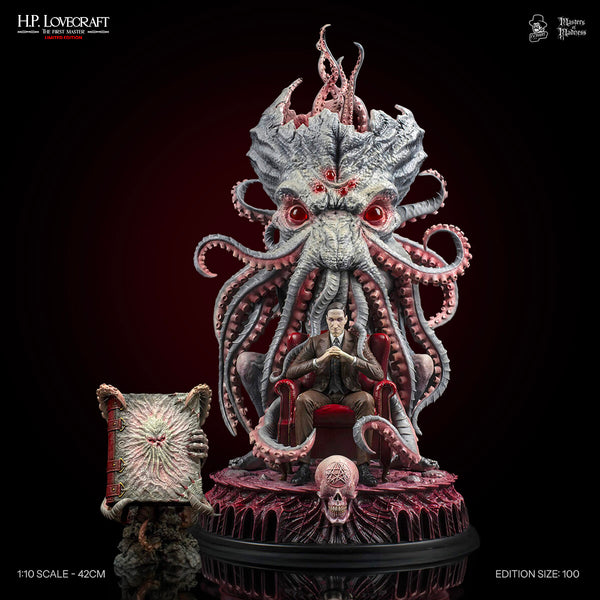
The most reliable value retention comes from original IP pieces in subject areas with durable cultural relevance. H.P. Lovecraft's influence on horror, science fiction, and gaming culture has been growing for decades and shows no signs of contracting.
Compare this to mass-market "limited editions" with production runs in the thousands: supply rarely compresses enough to create meaningful scarcity, and the secondary market typically prices them below retail within a year or two.
Hand-Painted vs Mass-Produced: The Craft Argument
Separate from the investment question is the object itself. Hand-painted polystone and machine-produced figures are different categories of thing, not just different price points.
Hand-painting means each piece is technically unique. The painter makes micro-decisions about shading, depth, and highlight placement that vary from copy to copy. Two pieces from the same edition of 100 will look subtly different under close inspection. This isn't a quality control problem — it's the proof of human involvement.
Machine-sprayed production creates perfect uniformity. Every copy is identical. This is efficient and reduces cost, but it also removes the object from the category of handcraft. You can feel the difference in the weight, the surface texture, the way light interacts with the paint.
Whether handcraft matters to you is a personal question. For collectors who care about what the object is, not just what it represents, it matters considerably.
The Collector's Honest Calculus
Here is what buying a limited edition statue from a serious studio should actually mean:
Buy if: The subject is one you've cared about for years, not months. You have a specific place for the piece. You understand that you're paying for craft and scarcity. You're comfortable with the possibility that resale value changes in ways you can't predict.
Don't buy if: You're primarily motivated by the idea of selling it later. You haven't thought about where it lives. You're buying the concept of "limited edition" rather than this specific object.
A collector who buys right once a year builds something meaningful over time. A collector who buys reactively fills space with objects that don't cohere.
The 100-Copy Rule at Studio Everart
The Masters of Madness collection operates on one rule: 100 numbered copies per statue, no exceptions, no reprints.
The H.P. Lovecraft Master — the first piece in the collection — launched in early 2026. Hand-painted polystone, original IP with no licensing agreements, numbered certificate included with each piece. Once the edition closes, the piece exists only on the secondary market.
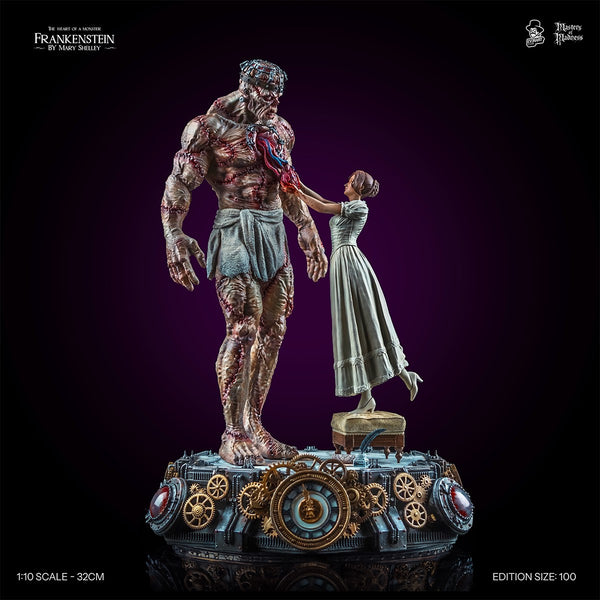
Mary Shelley and Bram Stoker are in development as the next two entries in the series. Each will follow the same model: 100 copies, original sculpt, no return to production.
The edition number of your piece appears on the base. Some collectors prefer lower numbers; others simply want the piece. Both are valid reasons to acquire.
See what's available in the current edition →
Frequently Asked Questions
Do limited edition statues increase in value?
Sometimes, and not reliably enough to plan around. Limited editions with genuinely closed production runs in popular subject areas have historically held value better than open-edition pieces. But the secondary market for art collectibles is illiquid and slow — selling at a specific price point can take months. Buy because you want the object, not because you expect a return. Financial upside, when it comes, is a side effect of buying right, not the goal.
How do I know if a statue is truly limited edition?
Three checks: (1) The producer states a specific number of copies — not "limited," but "100 copies" or equivalent. (2) Each piece is physically numbered on the base or certificate. (3) The producer has a stated, public no-reprint policy. If any of these three are missing, treat the "limited edition" claim as marketing, not fact.
Is the price of a hand-painted collector statue fair?
Within the premium collector statue market, our pieces sit at the entry level. Studios like Sideshow Collectibles, XM Studios, and Prime 1 Studio regularly price comparable pieces considerably higher, often for licensed IP that carries royalty overhead. An original IP piece — hand-painted, 100-copy edition — sits at the lower end of the professional collectible market, not at the top. The question isn't whether the price is fair in the abstract: it's whether this specific piece is worth it to you. See the product page for the current price.

100 numbered pieces. Hand-painted. An original Studio Everart design.
$756.00 $821.00 View H.P. Lovecraft: The Forbidden Edition