If you've been through our guide on polystone vs resin — or our breakdown of polystone vs cold cast bronze — you now know more about collector statue materials than most people who buy them.
That knowledge is only useful if you apply it. This piece is the bridge: what the right purchase actually looks like when you run the criteria against a real piece.
What You're Looking For, in Order
The material guides gave you the theory. Here's how it sequences into a real decision:
1. Is the material specific and verifiable? Not "premium resin" — a composition with named fillers, declared weight characteristics, and a finish that matches the claimed material. A polystone piece should be heavy. A hand-painted piece should show variation between copies.
2. Is the edition genuinely closed? A declared number — not a range, not "limited quantities" — with physical numbering on each piece and a documented no-reprint commitment. This is what makes scarcity real rather than implied.
3. Does the subject justify a serious piece? The best collector statues are made of subjects with cultural durability — figures or entities that will be as significant in twenty years as they are now. Franchise pieces rise and fall with their franchise. Literary subjects with independent cultural weight are a different category.
4. Does the sculptor know the source? This is harder to verify but visible in the result. A sculptor who has read Lovecraft makes different choices than one working from a brief. The specific wrongness of the proportions, the quality of stillness in the pose, the way light hits the paint — these are decisions that come from understanding, not from pattern-matching to a recognizable image.
Where This Points
Running those four criteria against the current collector statue market for horror and weird fiction subjects, a short list emerges. At the top of it: the Masters of Madness collection from Studio Everart.
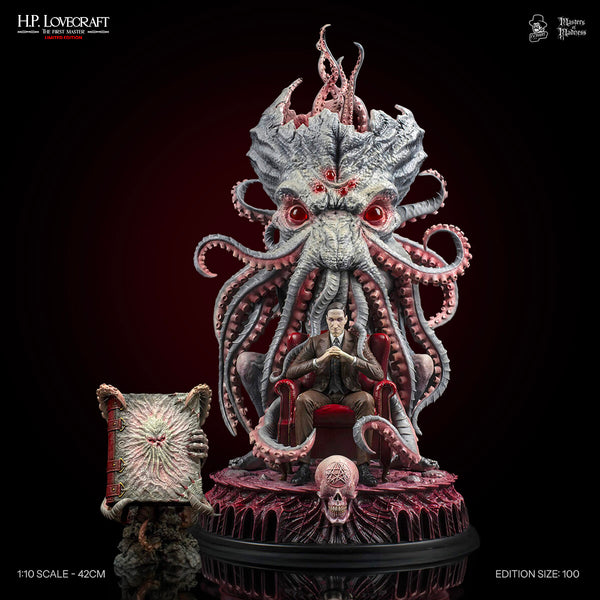
Specifically, the H.P. Lovecraft Master:
- Material: Hand-painted resin with declared composition. Each copy is finished individually — variation between copies is the evidence, not the exception.
- Edition: 100 numbered copies. No reprints. Physical edition number on each piece.
- Subject: H.P. Lovecraft as a literary figure — the most durable subject in the horror collecting space, with growing cultural relevance across literature, gaming, and film.
- Sculptor: The piece was developed from the source material, not from a generic "Lovecraft-shaped" brief. The stillness of the pose, the quality of the gaze — these are choices made by someone who understands what Lovecraft represents.
This is what the materials knowledge is for: not to become an expert in composites, but to be able to look at a specific piece and understand why it's priced the way it is, why the edition matters, and whether it's worth acquiring before the edition closes.
The Lovecraft Master is currently in its active edition. Once the 100 copies are gone, the piece moves to the secondary market and the price is no longer set by the studio.
See the H.P. Lovecraft Master — apply what you know →
Frequently Asked Questions
How do I know if a hand-painted piece is actually hand-painted?
Look for variation between copies. A genuine hand-painted piece will show subtle differences in shading, highlight placement, and color blending from one numbered copy to the next — because a human painter made micro-decisions on each one. Request close-up photography of multiple copies from the same edition and compare. Machine-sprayed finishes are uniform; hand-applied finishes are not. If a studio can't or won't provide comparison photos, treat the "hand-painted" claim cautiously.
Is 100 copies a small edition?
In the context of the premium collector statue market, yes. Most studio productions that claim "limited edition" status run 250–2,000 copies. Editions genuinely under 200 are uncommon. An edition of 100 with a firm no-reprint policy is at the smaller end of the legitimate market — which is why pieces in this category behave differently on the secondary market than larger runs do.
When should I buy, and when should I wait?
The case for buying during the active edition: you get the piece at studio price, you can choose your copy number, and you have direct documentation of provenance from the producer. The case for waiting: you can sometimes find pieces on the secondary market after the edition closes, occasionally below original retail if the original buyer needs liquidity. The risk is availability — secondary market supply on genuinely small editions is thin and inconsistent. If the piece meets your criteria and the edition is active, the rational move is to acquire during the edition.

100 numbered pieces. Hand-painted. An original Studio Everart design.
£599.00 £650.00 View H.P. Lovecraft: The Forbidden Edition