In 1981, Chaosium published a roleplaying game with a mechanic that was, at the time, considered almost perverse in its design philosophy: you were supposed to lose. Not die heroically in battle. Lose. Your character's mind would fracture, their sanity erode, until they were institutionalized, driven to suicide, or worse — converted into a willing servant of the very entities they had been trying to stop.
Call of Cthulhu did not just adapt H.P. Lovecraft's fiction. It weaponized it.
The Sanity Mechanic as Philosophical Statement
The genius of Call of Cthulhu lies in its Sanity system. Unlike conventional RPGs where heroes grow stronger with experience, CoC investigators grow more damaged. Every encounter with the Mythos — every tome read, every ritual witnessed, every Great Old One glimpsed — costs Sanity Points that can never be fully recovered.
This is Lovecraft's core thesis, made mechanical and inescapable: the universe is not built for human comprehension. Knowledge is not power. Knowledge is corrosion.
For the horror fan collector who has spent hours at a CoC table, watching carefully built investigators collapse under the weight of what they have learned, this is not just game design. It is a worldview. And it is precisely the worldview that informs what makes a high-quality horror statue worth acquiring.
Forty Years of Investigators, One Shared Aesthetic
Call of Cthulhu has been in continuous publication for over forty years — longer than most video game franchises have existed. Its longevity is not commercial luck. It is because the Lovecraftian aesthetic taps something genuinely universal: the terror of insignificance, the horror of the unknown, the beauty of the monstrous.
The investigators who populate CoC campaigns are always ordinary people — professors, journalists, private detectives — thrust into contact with forces that obliterate their frame of reference. The horror is not that they might die. It is that they might understand.
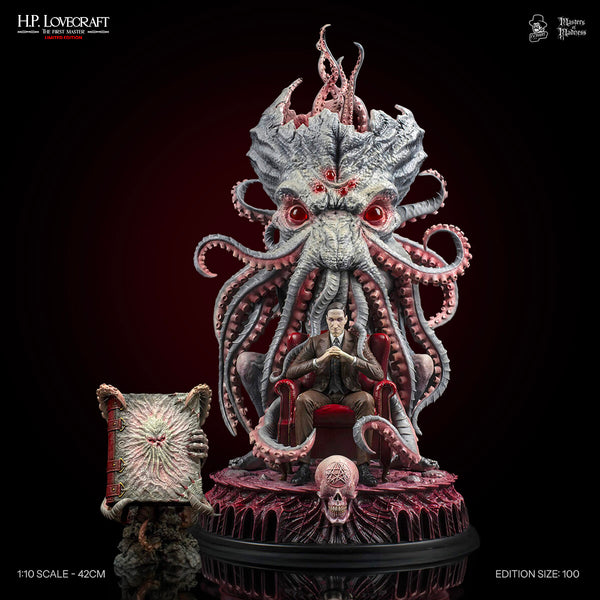
That tension — between the human need to comprehend and the inhuman refusal to be comprehended — is the same tension that makes Cthulhu statues and Lovecraft statues compelling as objects. They exist at the boundary. They are the comprehensible representation of the incomprehensible.
The Forbidden Edition and the Seasoned Investigator
Studio Everart's Forbidden Edition was conceived for the collector who has been on this path for a long time. Not the casual fan who encountered Lovecraft through a meme or a streaming series, but the investigator who knows the difference between a Byakhee and a Nightgaunt, who has read The King in Yellow, who has rolled dice at 2 AM knowing their character was probably not walking away from this one.
The Forbidden Edition speaks directly to this collector through:
- Uncompromising Fidelity: The sculpts do not soften the horror into something palatable. Like CoC itself, they refuse to offer comfort.
- Hand-Painted Atmosphere: Each hand-painted horror collectible in the Forbidden Edition uses layered washes and glazing techniques to create the wet, organic, wrong quality that Lovecraft's prose evokes but rarely achieves visually.
- Limited Runs: A numbered edition that mirrors the scarcity of genuine Mythos knowledge — available only to those paying attention.
The Final Roll
Every Call of Cthulhu session ends one of two ways: the investigators walk away diminished, or they do not walk away at all. Either outcome is a kind of victory, because the engagement was real and the dread was earned.
The Forbidden Edition is designed for the collector who understands this. The pieces do not ask to be admired from a distance. They demand to be reckoned with.

100 numbered pieces. Hand-painted. An original Studio Everart design.
€700,00 €760,00 View H.P. Lovecraft: The Forbidden Edition