Our Necronomicon is not a closed book. It is a predator at rest. We sculpted it as living tissue: skin stretched over the boards, small mouths set into the binding, an object that waits to open for the reader who can survive it. The history of the fictional grimoire lives in our history of the Necronomicon. This article is about the thing on your shelf.
Why a living book
Lovecraft never let the Necronomicon stay paper. In his fiction it warps the people who read it. Madness follows translation. We made that idea physical. The binding breathes. The clasps hold something in, not out. The form states the premise before a single page turns.
The design choices
Each mouth is hand-finished. The skin reads as grey and old, cured rather than tanned. The page block stays sealed, because an open Necronomicon has already done its work. We sculpted restraint into it. The book looks patient, and patience is the threat.
How it pairs with the statue
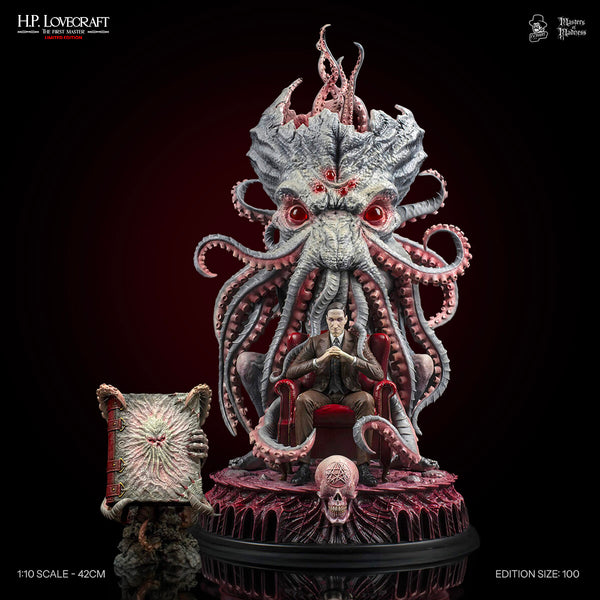
The Necronomicon ships with the Forbidden Edition statue and stands on its own. Beside the figure it reads as the source of his transformation, the book that opened him. Apart from the figure it holds a room by itself. See the Necronomicon.
Owning a forbidden object
A collector who buys this is not buying a prop. The piece is hand-painted, made in Italy, built to last in polystone. It belongs with the H.P. Lovecraft hub and the wider Masters of Madness concept. It is the rare horror object that argues with you across a room.
Lovecraftian glossary
- Necronomicon
- Lovecraft's invented book of forbidden, pre-human knowledge.
- Grimoire
- A book of magic spells and summoning rituals.
- Abdul Alhazred
- The mad poet Lovecraft named as the book's author.
- Olaus Wormius
- Fictional translator who rendered the text into Latin.
- The Mad Arab
- Common epithet for Alhazred across the mythos.
Sources

100 numbered pieces. Hand-painted. An original Studio Everart design.
$756.00 $821.00 View H.P. Lovecraft: The Forbidden Edition