There's a specific kind of silence that settles over a table just before a Call of Cthulhu session begins. The map is out. The dice are ready. The Keeper clears their throat and everyone leans slightly forward, because they know that what follows will be careful, atmospheric, and genuinely unsettling in a way most games aren't.
That silence has a shape. This piece is about what belongs in it.
What Is Call of Cthulhu?
Call of Cthulhu is a tabletop roleplaying game published by Chaosium, first released in 1981 and now in its 7th edition. Unlike combat-heavy RPGs, Call of Cthulhu is built around investigation, dread, and the gradual erosion of your character's sanity as they encounter things the human mind was not designed to process.
Players take the role of investigators — academics, detectives, journalists, doctors — ordinary people pulled into contact with the Lovecraftian Mythos. The Game Master is called the Keeper of Arcane Lore, or simply the Keeper. Their job isn't to defeat the players. It's to reveal the truth slowly enough that the revelation becomes unbearable.
It's the most literary RPG ever made. The source material isn't dragons and dungeons — it's Lovecraft, Machen, Blackwood, and the full tradition of weird fiction. Playing it well requires the same sensibility as reading that tradition well: patience, atmosphere, and an appreciation for what isn't said.
Setting the Mood: The Perfect Game Night
Call of Cthulhu rewards atmosphere more than almost any other game. The physical environment of the session shapes how players feel before a single die is rolled.
Lighting is the first lever. Overhead lights flatten everything — candlelight or low lamps create the long shadows the game deserves. A single lamp at one end of the table, leaving the far end slightly dark, does more for the mood than any sound effect playlist.
Physical props matter in CoC in a way they don't in other games. A handout typed on aged-looking paper, a hand-drawn map, a folded newspaper clipping — these objects make the fiction tactile. When a player holds a "telegram from Arkham" in their hands, they're briefly inside the world, not just describing their character's actions in it.
Sound: a low ambient track of rain, wind, or distant machinery works better than anything specifically "spooky." The game is better at quiet dread than loud horror.
Why a Physical Presence Changes Everything
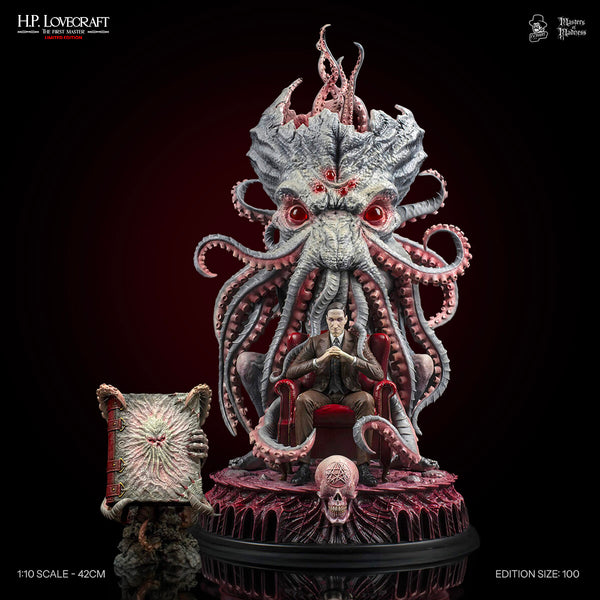
There's one prop that changes the table more than any other: a figure of the author himself, presiding over the session from the center of the table.
The H.P. Lovecraft Master statue — the first piece of the Masters of Madness collection — was built for exactly this kind of presence. Not as decoration. As a witness. Lovecraft sits at the head of the session the way the source material sits at the head of the game: everything at the table derives from him, and having him physically there makes that relationship visible and strange in the right way.
Players react to it. They lower their voices. They start referring to him — "what would he think of this?" — as if the figure is actually following the investigation. Which, in the logic of the game, he is. The Mythos doesn't belong to your Keeper or your scenario or your rulebook. It belongs to Lovecraft. Having him present is a constant reminder of that.
A Keeper who wants their players fully in the fiction needs objects that make the fiction feel real. The statue is the heaviest prop on the table, literally and figuratively.
Tips for New Keepers
Don't describe the monster. Lovecraft understood that imagination is more frightening than description. Give your players one specific, wrong detail — a sound, a smell, a glimpse of something at the edge of the lantern light — and let the rest grow in their minds. The moment you describe the creature completely, it becomes manageable.
Make the investigators care before the horror arrives. The best CoC sessions spend the first half in the mundane world — libraries, interviews, train journeys — so that when the Mythos intrudes, players feel the contrast. Horror requires normalcy to violate.
Sanity loss is the game's core mechanic, not damage. A character who loses Sanity points is more interesting than one who takes wounds. Lean into it. Let players roleplay what their characters are becoming as the session progresses.
The scenario doesn't have to end with victory. Most Lovecraft stories end with the protagonist alive but changed, understanding something they wished they didn't. Your players can survive and lose. That's often the best ending.
Frequently Asked Questions
What do I need to start playing Call of Cthulhu?
The Call of Cthulhu 7th Edition Starter Set is the cleanest entry point — it contains simplified rules, a set of pre-generated investigators, and a short introductory scenario that teaches the core mechanics through play. For a full campaign, the Keeper Rulebook and Investigator Handbook are the standard references. Beyond that: pencils, dice (the standard CoC set includes percentile dice), printed character sheets, and enough table space for a map or two.
Is Call of Cthulhu good for beginners?
Yes, with the right scenario. The game's mechanics are simpler than most RPGs — skill checks resolve most actions, and combat is deliberately dangerous enough that players quickly learn to avoid it. The Starter Set's introductory scenario "The Haunting" has been introducing players to CoC for decades and remains the best first session for a new group. The challenge for beginners is tonal, not mechanical: Call of Cthulhu rewards restraint and atmosphere rather than aggressive play.
How long does a Call of Cthulhu session take?
A standalone one-shot scenario typically runs 3–5 hours, depending on player pace and investigation depth. A full campaign module — like "Masks of Nyarlathotep" or "Horror on the Orient Express" — can run 30–60+ hours across multiple sessions. Most regular groups play 3–4 hour sessions and work through a published campaign over several months. The game rewards slow, careful investigation, so rushing shortens the experience but also undermines it.

100 numbered pieces. Hand-painted. An original Studio Everart design.
$756.00 $821.00 View H.P. Lovecraft: The Forbidden Edition