If you are reading this, you already know that H.P. Lovecraft collectibles are not a single category.
There are mass-produced figurines selling for €20. There are mid-range resin pieces in the €150–350 range. And there are a handful of limited-edition hand-painted statues that sit at the top of the market — pieces built for collectors who want something that will outlast a trend.
This guide covers the full spectrum, explains the criteria that separate a shelf ornament from a collector's piece, and tells you exactly what to look for before spending serious money on an H.P. Lovecraft statue in 2026.
Why Lovecraft Collectibles Are a Different Category
Most collectible markets are driven by IP — Star Wars, Marvel, anime. Lovecraft is different. The work is in the public domain. There is no central licensor, no official tier of approved manufacturers, no "canon" product.
This creates both a problem and an opportunity.
The problem: the market is flooded. Search "Cthulhu statue" on any platform and you will find hundreds of products ranging from €15 printed resin to €500 hand-finished pieces. The visual similarity between a cheap and an expensive piece is often misleading in a thumbnail.
The opportunity: because there is no licensee, the best studios in the space compete entirely on craft. The producer who goes deepest into the source material, who hires the best sculptors, who invests in hand-painting — they win on product alone.
That context matters when you are evaluating any H.P. Lovecraft collectible statue.
What to Look for in a Lovecraft Statue
Material: Polystone vs Resin vs PVC
Polystone (also called cold-cast resin or composite stone) is the standard for high-end collectibles. It is dense, heavy, takes paint well, and does not yellow or warp over years. A 42cm polystone piece typically weighs 4–9 kg. That weight is a quality signal.
Resin in the mid-range market refers to polyurethane or epoxy resin — lighter than polystone, still capable of excellent surface detail, and the material of choice for smaller studios and independent sculptors. Quality varies enormously based on the pour, the finish, and the paint application.
PVC is the material of mass-market figures. It is flexible, cheap to manufacture, and not a collector's material. A PVC piece will degrade in UV exposure, warp near heat, and scratch easily. Avoid it for anything you intend to display long-term.
If a product listing does not specify the material, assume PVC or low-grade resin.
Edition Size: Why It Matters
Edition size determines two things: scarcity and the producer's commitment to quality control.
A run of 10,000 pieces requires factory-line production. A run of 100 numbered pieces requires individual attention — hand-painting, individual numbering, individual inspection before shipping.
For H.P. Lovecraft statues specifically, watch for:
- Open edition — no scarcity, no secondary market value, typically mass production
- Limited but uncapped — "limited" as marketing language without a hard number
- Numbered limited edition — a hard ceiling, numbered certificates, genuine scarcity
The numbered edition standard is what serious Lovecraft collectors should look for. Your certificate number is verifiable. The edition cannot be quietly expanded after sellout.
Hand-Painted vs Factory-Finished
Factory finishing means airbrush over a base coat, standardised across the run. Hand-painting means individual artists apply colour by hand, with variation between pieces — and with the kind of depth and texture that photography rarely captures but becomes obvious in person.
The difference is visible in skin tones, in the gradient of aged materials, in the way light hits a piece that has been layered with colour rather than coated with it.
Ask whether the piece is hand-painted or factory-finished. A reputable studio will tell you clearly. If the product listing uses "hand-finished" ambiguously, request clarification.
What's Included in the Bundle
Top-tier Lovecraft collectibles often ship as bundles — statue plus accessories that have independent value. Common inclusions:
- Interchangeable heads or portrait variants
- Prop replicas (Necronomicon, Elder Sign, artefacts from the mythos)
- Original art prints or certificates
- Custom packaging designed to double as display packaging
These inclusions are not padding — they indicate a studio that has thought about the collector experience beyond the statue itself.
The H.P. Lovecraft Collectible Market in 2026
The market has matured significantly since the early Cthulhu merchandise wave of the 2010s. Buyers are more sophisticated. The mass-market Cthulhu figurine that dominated the €20–50 price point has largely saturated — you can only sell the same tentacled idol so many times.
What is growing: the literary Lovecraft — statues of the author himself, pieces that reference specific texts (The Call of Cthulhu, At the Mountains of Madness, The Shadow over Innsmouth) with scholarly attention, and collections that place Lovecraft in a broader canon of horror literature.
The collector base for this tier is smaller but more serious. They buy one or two pieces per year, display them prominently, and research before purchasing. They are not impulse buyers.
Price benchmarks in 2026:
- Under €100: Mass-market PVC or small resin. Acceptable for casual fans, not for serious collectors.
- €150–350: Mid-range resin, often limited run but factory-finished. Some genuinely good pieces in this range from smaller studios.
- €500–800: High-end polystone, numbered editions, hand-painted. This is the serious collector tier.
- Over €1,000: Artist-direct or gallery pieces, typically one-of-a-kind or very small runs.
The Forbidden Edition: Studio Everart's Approach
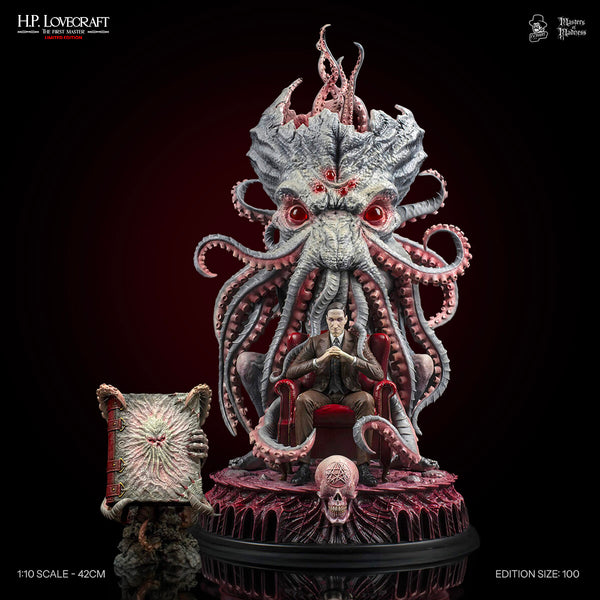
Studio Everart built the H.P. Lovecraft — The Forbidden Edition as the opening piece of the Masters of Madness collection — a series dedicated to the writers who built the architecture of modern horror.
The brief was to make a statue of Lovecraft himself, not Cthulhu. The man who dreamed the monster, not the monster.
Specifications:
- Material: Polystone
- Height: 42 cm | Width: 23.2 cm | Depth: 26.6 cm
- Weight: 9 kg
- Edition size: 100 numbered pieces
- Painting: Hand-painted by Simona Bordonaro
- Sculpture: Giacinto Platania
Bundle includes:
- Full resin statue of H.P. Lovecraft
- Two interchangeable portrait heads (different expressions)
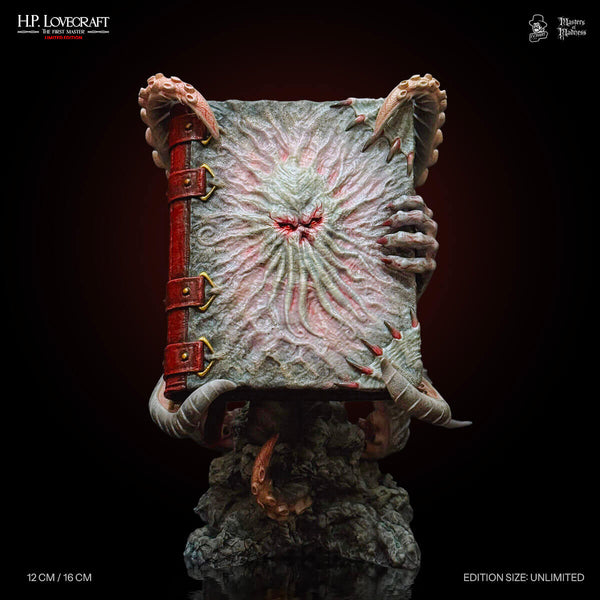
- The Necronomicon — leather-bound classic-size replica
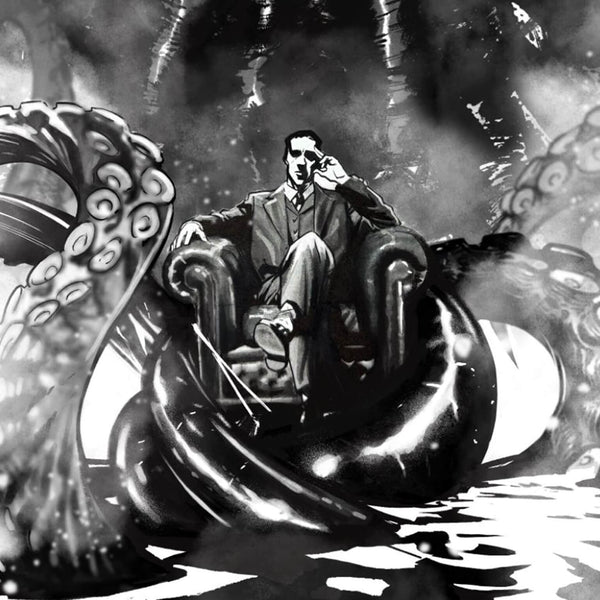
- Original art print by Marvel Comics artist Francesco Manna (30×40 cm, black and white)
Price: €700 full payment / €220 deposit with balance before shipping.
The decision to limit to 100 pieces was not a marketing strategy — at that edition size, each piece receives individual inspection before leaving the studio. Numbers are stamped, not printed.
How to Evaluate Any Lovecraft Collectible Before Buying
Five questions to ask before purchasing any H.P. Lovecraft statue in the €200+ range:
- What is the material? Polystone or high-grade resin for anything above €300.
- Is it hand-painted? Ask for confirmation, not marketing copy.
- What is the edition ceiling? Get the number. "Limited" without a number is a marketing word.
- Who sculpted it? Named sculptors with visible portfolios are a quality signal.
- What is the shipping and insurance policy? A 9kg polystone piece requires proper crating. Studios that ship responsibly quote insurance up front.
Final Verdict
The serious H.P. Lovecraft collectible market in 2026 is small enough that first-mover advantage still exists for both studios and collectors. The pieces being made now — the numbered, hand-painted polystone editions from studios that treat the source material with literary seriousness — will be the reference points for everything that follows.
If you are looking for a Lovecraft collectible to own for the next twenty years, the criteria are clear: polystone, hand-painted, numbered edition, named artists.
The Forbidden Edition meets all four.
H.P. Lovecraft: The Forbidden Edition
100 copie numerate. Artigianato italiano. IP originale.